Wednesday, 10 September 2014

Ahmed Shehzad

  Ahmed Shahzad Biography


Source Link www.google.com

Full name Ahmed Shahzad

Born November 23, 1991, Lahore, Punjab

Current age 19 years 57 days

Major teams Pakistan, Habib Bank Limited, Lahore Eagles, Lahore Ravi, Lahore Shalimar, Pakistan Under-19s

Batting style Right-hand bat

Bowling style Legbreak

Ahmed Shehzad Picture

Ahmed Shehzad aims to be an aggressive batsman like Ricky Ponting, and he is well on his way if his top-order performances for Pakistan Under-19s are any indication. Shehzad made his first-class debut in January 2007, just two months after his 15th birthday, and has since established himself as an opening batsman for the U-19 team. His 167 in the same year helped Pakistan chase down a stiff 342 in the first Youth Test against England in Derby. He backed that up with impressive performances at home, scoring 315 runs – with a highest of 105 – as Australia Under-19s were thrashed 5-0. Another century followed in the Youth Test against Bangladesh, and he carried that form into the triangular tournament in Sri Lanka in 2008, which Pakistan won. He made it to the Pakistan Test squad for the home series against Sri Lanka the following year despite not being in the probables. A century in the tour game against the visitors changed his fortunes. He returned to the Under-19 circuit to represent Pakistan in the World Cup in New Zealand.

Major Team: Pakistan Lahore Eagles, Lahore Ravi, Lahore Shalimar, Pakistan Under-19s

Playing Roll: Batsman

Batting Style: Right

Bowling Style: Legbreak

Ahmed Shehzad Profile

Ahmed Shehzad aims to be an aggressive batsman like Ricky Ponting, and he is well on his way if his top-order performances for Pakistan Under-19s are any indication. Shehzad made his first-class debut in January 2007, just two months after his 15th birthday, and has since established himself as an opening batsman for the U-19 team. His 167 in the same year helped Pakistan chase down a stiff 342 in the first Youth Test against England in Derby. He backed that up with impressive performances at home, scoring 315 runs - with a highest of 105 - as Australia Under-19s were thrashed 5-0. Another century followed in the Youth Test against Bangladesh, and he carried that form into the triangular tournament in Sri Lanka in 2008, which Pakistan won. He made it to the Pakistan Test squad for the home series against Sri Lanka the following year despite not being in the probables. A century in the tour game against the visitors changed his fortunes. He returned to the Under-19 circuit to represent Pakistan in the World Cup in New Zealand.

Ahmed Shehzad (born 23 November 1991 in Lahore) is a Pakistani cricketer. He plays domestic cricket for Habib Bank Limited. He made his one-day international debut for Pakistan on 24 April 2009 against Australia.

Ahmed Shehzad aims to be an aggressive batsman like Ricky Ponting, and he is well on his way if his top-order performances for Pakistan Under-19s are any indication. Shehzad made his first-class debut in January 2007, just two months after his 15th birthday, and has since established himself as an opening batsman for the U-19 team.

His 167 in the same year helped Pakistan chase down a stiff 342 in the first Youth Test against England in Derby. He backed that up with impressive performances at home, scoring 315 runs - with a highest of 105 - as Australia Under-19s were thrashed 5-0.

Another century followed in the Youth Test against Bangladesh, and he carried that form into the triangular tournament in Sri Lanka in 2008, which Pakistan won. He made it to the Pakistan Test squad for the home series against Sri Lanka the following year despite not being in the probables.

A century in the tour game against the visitors changed his fortunes. He returned to the Under-19 circuit to represent Pakistan in the World Cup in New Zealand.

Ahmed Shehzad aims to be an aggressive batsman like Ricky Ponting, and he is well on his way if his top-order performances for Pakistan Under-19s are any indication. Shehzad made his first-class debut in January 2007, just two months after his 15th birthday, and has since established himself as an opening batsman for the U-19 team. His 167 in the same year helped Pakistan chase down a stiff 342 in the first Youth Test against England in Derby. He backed that up with impressive performances at home, scoring 315 runs - with a highest of 105 - as Australia Under-19s were thrashed 5-0. Another century followed in the Youth Test against Bangladesh, and he carried that form into the triangular tournament in Sri Lanka in 2008, which Pakistan won. He made it to the Pakistan Test squad for the home series against Sri Lanka the following year despite not being in the probables. A century in the tour game against the visitors changed his fortunes. He returned to the Under-19 circuit to represent Pakistan in the World Cup in New Zealand.

Ahmed Shahzad 100s    Ahmed Shahzad 50    Ahmed Shahzad 50s    Ahmed Shahzad average    Ahmed Shahzad batting    Ahmed Shahzad biography    Ahmed Shahzad bowling    Ahmed Shahzad children    Ahmed Shahzad CLT20    Ahmed Shahzad cricket record    Ahmed Shahzad family    Ahmed Shahzad fastest 100    Ahmed Shahzad fastest century    Ahmed Shahzad fielding    Ahmed Shahzad highest score    Ahmed Shahzad history    Ahmed Shahzad IPL    Ahmed Shahzad ODI    Ahmed Shahzad pictures    Ahmed Shahzad profile    Ahmed Shahzad ranking    Ahmed Shahzad T20    Ahmed Shahzad Test

Ahmed Shehzad aims to be an aggressive batsman like Ricky Ponting, and he is well on his way if his top-order performances for Pakistan Under-20s are any indication. Shehzad made his first-class debut in January 2007, just two months after his 15th birthday, and has since established himself as an opening batsman for the U-19 team. His 167 in the same year helped Pakistan chase down a stiff 342 in the first Youth Test against England in Derby. He backed that up with impressive performances at home, scoring 315 runs – with a highest of 105 – as Australia Under-19s were thrashed 5-0. Another century followed in the Youth Test against Bangladesh, and he carried that form into the triangular tournament in Sri Lanka in 2008, which Pakistan won. He made it to the Pakistan Test squad for the home series against Sri Lanka the following year despite not being in the probables. A century in the tour game against the visitors changed his fortunes. He returned to the Under-20 circuit to represent Pakistan in the World Cup in New Zealand.

Ahmed Shehzad Batting, Fielding and Bowling

The above stats are as per date of this post.

Ahmed Shehzad Career

ODI:

2009-2009

T20:

2009-2009

Ahmed Shehzad ODI

Debut:

Pakistan Vs Australia at Dubai Sports City Cricket Stadium, Dubai - Apr 24, 2009

Last played:

Pakistan Vs Australia at Sheikh Zayed Stadium, Abu Dhabi - May 03, 2009

Ahmed Shehzad T20

Debut:

Pakistan Vs Australia at Dubai Sports City Cricket Stadium, Dubai - May 07, 2009

Last played:

Pakistan Vs England at Kennington Oval, London - Jun 07, 2009

International Debut: 2009

Batting and fielding records

M Inns NO Runs HS Ave BF SR 100 50 4s 6s Ct St 

ODI 18 14 1 383 115 29.46 575 66.61 2 - 37 5 7 -

T20I 6 3 0 62 54 20.67 53 116.98 - 1 11 - 1 -

Bowling records

M Inns Balls Runs Wkts BBI BBM Ave Eco SR 4W 5W 10W 

ODI 18 2 15 20 - - - - 8.00 - - - -

T20I 6 - - - - - - - - - - - -

Career Statistics

ODI Debut: Australia v Pakistan at Dubai, Apr 24, 2009

Twenty20 Debut: Australia v Australia at Dubai, May 07, 2009.

 Ahmed Shehzad
 Ahmed Shehzad

Ahmed Shehzad
 Ahmed Shehzad

Ahmed Shehzad

Ahmed Shehzad

Ahmed Shehzad

Ahmed Shehzad
 Ahmed Shehzad
 Ahmed Shehzad

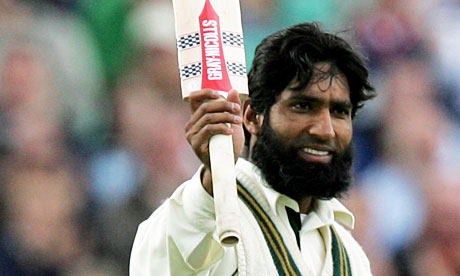
Mohammad Yousuf

 Mohammad Yousuf Biography

Source Link www.google.com

Mohammad Yousuf (formerly Yousuf Youhana, born 27 August 1974, Lahore, Punjab, Pakistan) is a Pakistani cricketer who has been a member of the Pakistani national cricket team since 1998. He is best known for his achievement in 2006 when he broke the great West Indian batsman, Sir Vivian Richards', world record for the most Test runs in a single calendar year. Prior to his conversion to Islam in 2005, Yousuf was one of the few Christians to play in the Pakistan national cricket team. He made his Test debut against South Africa at Durban and ODI debut against Zimbabwe at Harare. He has scored over 9,000 ODI runs at an average of 43.63 (2rd highest batting average among Pakistani batsmen after Zaheer Abbas and 6,770 Test runs at an average of 55.49 (highest batting average amongst all Pakistani batsmen) with 23 Test centuries. He has the record of scoring the most runs without being dismissed in ODIs, 405 against Zimbabwe in Zimbabwe in 2002-03. He has also scored a 23-ball fifty in ODIs, and a 68-ball hundred. In Tests he has scored a 27-ball fifty, which is 3rd fastest by any player. He was top scorer during the successive years of 2002 and 2003 in the world in ODIs. In 2004, he scored a memorable 111 against the Australians in the Boxing Day Test. In December 2005, he scored 223 against England at Lahore, also earning him the man of the match award. Seven months later in July 2006, when Pakistan toured England, he scored 202 and 48 in the first Test, again earning himself the man of the match award. He followed up with 192 in the third Test at Headingley and 128 in the final Test at the Oval. Yousuf was named CNN-IBN.s Cricketer of the Year for 2006, ahead of the likes of Australian captain Ricky Ponting, West Indies Brian Lara, Australian spinner Shane Warne, South Africa.s bowling spearhead Makhaya Ntini and Sri Lanka.s Muttiah Muralitharan. He was selected as a Wisden Cricketer of the Year in the 2007 edition. Yousuf became the fourth recipient of the ICC 'Test Cricketer of the Year' award for 2007, he scored 944 runs at an average of 94.40 including five centuries and two fifties in just 10 innings and that was enough to be awarded the honour ahead of Kevin Pietersen and Ricky Ponting. Yousuf was also named in the 2007 Test team of the Year alongside compatriot Mohammad Asif. A year that started on a promising note, Yousuf carried it forward to break two world records both held earlier by West Indian great Sir Vivian Richards. The 32-year-old smashed an unparalleled 1788 runs in just 11 Test matches with the help of nine centuries . his second record . taking him beyond the Windies great yet again. Yousuf is known for his ability to score runs at exceptional rate through his great technique and composed strokeplay. Although capable of hitting the ball hard, Yousuf is quick between the wickets, although he is prone to being run out. Yousuf is a skillful infielder, with a report prepared in late 2005 showing that since the 1999 Cricket World Cup, he had effected the ninth highest number of run-outs in ODI cricket of any fieldsman. He is also distinguished by his characteristic celebration after hitting one hundred runs for his country, where he prostrates in thankfulness to Allah in the direction of Mecca. He has observed this act (known as the Sajdah) recently since his conversion to Islam.

Major teams Pakistan, Asia XI, Bahawalpur, Lahore, Lahore Badshahs, Lancashire, Pakistan International Airlines, Warwickshire, Water and Power Development Authority, Zarai Taraqiati Bank Limited

Batting style Right-hand bat

Bowling style Right-arm offbreak

Mohammad Yousuf Profile

Until his conversion to Islam in 2005, Mohammad Yousuf (formely known as Yousuf Youhana) was one of a handful of Christians to play for Pakistan. After a difficult debut against South Africa in 1997-98, he quickly established himself as a stylish world-class batsman, and a pillar of Pakistan's middle order, alongside Inzamam-ul-Haq. He is no sluggard, but gathers his runs through orthodox, composed strokeplay, unlike some of his colleagues who seldom hint at permanence. He is particularly strong driving through the covers and flicking wristily off his legs and brings with him as decadent and delicious a backlift as any in the game. A tendency to overbalance when playing across his front leg can get him into trouble. He excels at both versions of the game, and in one-day cricket can score 20 or 30 runs before anyone notices. He is quick between the wickets although not necessarily the best judge of a single. There had been questions about his temperament as batsman when the pressure is on, but between 2004 and 2005, he began to silence critics. First came a spellbindingly languid century against the Australians in Melbourne, as captain to boot, where he ripped into Shane Warne like few Pakistani batsmen have before or since. A century in the cauldron of Kolkatta followed but he ended the year with possibly his most important knock: a double century against England at Lahore so easy on the eye, you almost didn't notice it. With Inzamam missing through injury for parts of the innings, Yousuf displayed an unusual responsibility, eschewing the waftiness that has previously blighted him. In 2006, Yousuf truly came of age in a record-breaking year. He began by plundering India and continued in England, not just scoring under pressure, but scoring big. A double ton at Lord's was followed by another big hundred at Headingly and the Oval. He rounded off a fantastic year with four hundreds in three Tests against the West Indies, a feat that took him past Viv Richards's long-standing record of most Test runs in a calendar year and also saw him establish the record for most Test hundreds (9) in a year. With Inzamam nearing a natural end, the credentials of Yousuf as Pakistan's premier batsman are impressive.

He changed his name from Yousuf Youhana on converting to Islam in September 2005

Teams: Pakistan (Test: 1997/98-2010); Pakistan (ODI: 1997/98-2010/11); Asian Cricket Council XI (ODI: 2004/05-2007); Pakistan (Int Twenty20: 2006-2010); Bahawalpur (Main FC: 1996/97); Water and Power Development Authority (Main FC: 1997/98-2009/10); Lahore City (Main FC: 1997/98); Lahore Blues (Main FC: 2000/01); Pakistan International Airlines (Main FC: 2001/02); Lahore (Main FC: 2003/04); Lancashire (Main FC: 2008); Lahore Shalimar (Main FC: 2010/11); Warwickshire (Main FC: 2011); Bahawalpur (Main ListA: 1996/97); Pakistan International Airlines (Main ListA: 1999/00-2001/02); Zarai Taraqiati Bank Limited (Main ListA: 2002/03); Lahore (Main ListA: 2003/04); Water and Power Development Authority (Main ListA: 2007/08-2008/09); Lancashire (Main ListA: 2008); Lahore Lions (Main ListA: 2010/11); Warwickshire (Main ListA: 2011); Lahore Lions (Main Twenty20: 2004/05-2011); Islamabad Leopards.

English County Update: Mohammad Yousuf got out after scoring 109-smashing 13 fours and 1 SIX for Warwickshire against Worcestershire, on a poor pitch. Yousuf, defying a treacherous pitch quite unsuited for this level of cricket, gave a masterful demonstration of batting to record the 30th century of his first-class career. Well Done MoYo!

Mohammad Yousuf offered Sajda after he scored his maiden County century.

Batting and fielding averages

Mat Inns NO Runs HS Ave BF SR 100 50 4s 6s Ct St

Tests 90 156 12 7530 223 52.29 14372 52.39 24 33 957 51 65 0

ODIs 288 273 40 9720 141* 41.71 12942 75.10 15 64 785 90 58 0

T20Is 3 3 0 50 26 16.66 43 116.27 0 0 5 1 1 0

First-class 141 239 20 10505 223 47.96 30 51 84 0

List A 338 322 47 11026 141* 40.09 15 75 70 0

Twenty20 23 20 2 357 57* 19.83 322 110.86 0 1 37 8 9 0

Bowling averages

Mat Inns Balls Runs Wkts BBI BBM Ave Econ SR 4w 5w 10

Tests 90 1 6 3 0 - - - 3.00 - 0 0 0

ODIs 288 2 2 1 1 1/0 1/0 1.00 3.00 2.0 0 0 0

T20Is 3 - - - - - - - - - - - -

First-class 141 18 24 0 - - - 8.00 - 0 0 0

List A 338 8 13 1 1/0 1/0 13.00 9.75 8.0 0 0 0

Twenty20 23 1 1 1 0 - - - 6.00 - 0 0 0

International Debut: 1998

Batting and fielding records

M Inns NO Runs HS Ave BF SR 100 50 4s 6s Ct St 

Test 90 156 12 7530 223 52.29 14372 52.39 24 33 957 51 65 -

ODI 289 273 40 9670 141* 41.50 12861 75.19 15 63 783 89 56 -

T20I 3 3 0 50 26 16.67 43 116.28 - - 5 1 1 -

Bowling records

M Inns Balls Runs Wkts BBI BBM Ave Eco SR 4W 5W 10W 

Test 90 1 6 3 - - - - 3.00 - - - -

ODI 289 2 2 1 1 1/0 1/0 1.00 3.00 2.00 - - -

T20I 3 - - - - - - - - - - - -

Career Statistics

Test Debut: South Africa v Pakistan at Durban, 26 Feb - 02 Mar 1998

ODI Debut: Zimbabwe v Pakistan at Harare, Mar 28, 1998

Twenty20 Debut: England v England at Bristol, Apr 28, 2006

  Mohammad Yousuf is a pillar of Pakistan batting squad setting many records in cricket history. An orthodox middle order batsman, Yousuf is next to none in his style of batting. Although a perfect Test personality, he is equally successful in one-day internationals.

Mohammad Yousuf, formerly known as Yousuf Youhana made a difficult

Test Career Batting and Fielding (1997/98-2010)

M I NO Runs HS Ave 100 50 SRate Ct

Pakistan 90 156 12 7530 223 52.29 24 33 52.39 65

Test Career Bowling (2000/01)

Balls Mdns Runs Wkts BB Ave 5wI 10wM SRate Econ

Pakistan 6 0 3 0 0-3 3.00

First-Class Career Batting and Fielding (1996/97-2011)

M I NO Runs HS Ave 100 50 Ct

Overall 141 239 20 10505 223 47.96 30 51 84

First-Class Career Bowling (1997/98-2001/02)

Balls Mdns Runs Wkts BB Ave 5wI 10wM SRate Econ

Overall 18 0 24 0 0-3 8.00

One-Day International Career Batting and Fielding (1997/98-2010/11)

M I NO Runs HS Ave 100 50 SRate Ct

Pakistan 281 267 40 9554 141* 42.08 15 62 74.91 55

Asian Cricket Council XI 7 6 0 166 66 27.66 0 2 87.83 3

Overall 288 273 40 9720 141* 41.71 15 64 75.10 58

One-Day International Career Bowling (2004-2006/07)

Balls Mdns Runs Wkts BB Ave 4wI 5wI SRate Econ

Pakistan 2 0 1 1 1-0 1.00 0 0 2.00 3.00

One-Day Career Batting and Fielding (1996/97-2011)

M I NO Runs HS Ave 100 50 Ct

Overall 338 322 47 11026 141* 40.09 15 75 70

One-Day Career Bowling (2001/02-2006/07)

Balls Mdns Runs Wkts BB Ave 4wI 5wI SRate Econ

Overall 8 0 13 1 1-0 13.00 0 0 8.00 9.75

International Twenty20 Career Batting and Fielding (2006-2010)

M I NO Runs HS Ave 100 50 SRate Ct

Pakistan 3 3 0 50 26 16.66 0 0 116.27 1

Twenty20 Career Batting and Fielding (2004/05-2011)

M I NO Runs HS Ave 100 50 SRate Ct

Overall 23 20 2 357 57* 19.83 0 1 110.86 9

Twenty20 Career Bowling (2006/07)

Balls Mdns Runs Wkts BB Ave 4wI 5wI SRate Econ

Overall 1 0 1 0 0-1 6.00

Recent matches

Bat & Bowl Team Opposition Ground Match Date Scorecard

35 Lahore Lions v R Rams Faisalabad 30 Jun 2011 Twenty20

5 Lahore Lions v Hawks Faisalabad 29 Jun 2011 Twenty20

18 Lahore Lions v Leopards Faisalabad 27 Jun 2011 Twenty20

13 Lahore Lions v S Stallions Faisalabad 25 Jun 2011 Twenty20

0, 0 Warwickshire v Durham Birmingham 24 May 2011 First-class

74* Warwickshire v Durham Birmingham 22 May 2011 List A

27 Warwickshire v Notts Nottingham 18 May 2011 First-class

0* Warwickshire v Leics Leicester 15 May 2011 List A

109, 68 Warwickshire v Worcs Birmingham 11 May 2011 First-class

72 Warwickshire v Northants Northampton 8 May 2011 List A

Profile

This much is at least certain that few Pakistani batsmen have been as elegant as Mohammd Yousuf and fewer still have been as prolific, as hungry to bat as long and bat as big.

Read More

Timeline

February 26, 1998

Inauspicious debut

March 28, 1998

One-day debut is better

November 10, 1998.

Mohammad Yousuf

Mohammad Yousuf

Mohammad Yousuf

Mohammad Yousuf

Mohammad Yousuf

Mohammad Yousuf

Mohammad Yousuf

Mohammad Yousuf

Mohammad Yousuf

Mohammad Yousuf


Imran Farhat

 Imran Farhat Biography

Source Link www.google.com

Full name Imran Farhat

Born May 20, 1982, Lahore, Punjab

Current age 31 years 271 days

Major teams Pakistan, Biman Bangladesh, Habib Bank Limited, ICL Pakistan XI, Lahore, Lahore Badshahs, Lahore Eagles, Lahore Lions, Pakistan Reserves

Also known as Romi

Batting style Left-hand bat

Bowling style Legbreak

Relation Father-in-law - Mohammad Ilyas, Brother - Humayun Farhat.


Career

 Farhat made his senior debut aged 15 in a one-day match for Karachi City against Malaysia, together with three other players who went on to play Test cricket (Taufeeq Umar, Bazid Khan and Kamran Akmal). Three years later, in February 2001, Farhat made his One Day International debut, against New Zealand in Auckland, scoring 20 runs in a chase of 150 to win. After the tour of New Zealand, where Farhat played three Tests and three ODIs, he was sent back to domestic cricket before returning against Australia in the third Test of the 2002–03 series, where he made 30 and 22 in an innings defeat. However, he was retained for the home two-Test series against South Africa in 2003–04, where he scored 235 runs including a maiden Test century in a 1–0 series win, second behind fellow opener Taufeeq Umar.

A month later, Farhat played in an ODI-only series against New Zealand, which Pakistan won 5–0, and Farhat made three fifties along with his second international century, ending with 348 runs at a batting average of 69.60, once again the second-highest amount of runs – this time behind Yasir Hameed. The season was rounded off with another century, this time against India, where he made 101 to help Pakistan gain a 202-run first-innings lead and eventually won the match by nine wickets. However, Farhat tallied 81 runs in the other two matches, which Pakistan lost to lose the series 1–2.

Farhat was less impressive the following season, however, and in four Tests, two against Sri Lanka and two against Australia, he only passed fifty twice, ending the season with 199 runs at 24.87 before the selectors left him out for the third Test of the series with Australia. In September 2004, just before the 2004–2005 season, he had been dropped from the ODI side following the 2004 Champions Trophy, as he had failed to pass 40 with any of his last ten innings, and that included 38 not out against the non-Test nation of Kenya, 20 against ODI debutants Hong Kong and 24 against Bangladesh.

He continued to score heavily in the domestic competitions and a century in a practise game against the visiting Indian team was rewarded with a place in the squad to take on India in the Test series (2006). He returned to Test cricket in style, with an important half century in the deciding third Test at Karachi. He scored a brilliant unbeaten century in the final test against New Zealand in 2009. His brother Humayun Farhat has also played International cricket for Pakistan.
Career statistics

Test debut New Zealand v Pakistan at Auckland, Mar 8-12, 2001 scorecard

Last Test South Africa v Pakistan at Centurion, Feb 22-24, 2013 scorecard

Test statistics .

ODI debut New Zealand v Pakistan at Auckland, Feb 17-18, 2001 scorecard

Last ODI Pakistan v South Africa at Birmingham, Jun 10, 2013 scorecard

ODI statistics .

T20I debut Australia v Pakistan at Melbourne, Feb 5, 2010 scorecard

Last T20I Bangladesh v Pakistan at Dhaka, Nov 29, 2011 scorecard

T20I statistics

 First-class debut 1998/99

Last First-class National Bank of Pakistan v Habib Bank Limited at Islamabad, Jan 22-25, 2014 scorecard

List A debut 1997/98.

Last List A National Bank of Pakistan v Habib Bank Limited at Islamabad, Jan 27, 2014 scorecard.

Twenty20 debut Karachi Dolphins v Lahore Lions at Lahore, Apr 25, 2005 scorecard.

Last Twenty20 Faisalabad Wolves v Lahore Eagles at Rawalpindi, Feb 11, 2014 scorecard.
Recent matches

Bat & Bowl Team Opposition Ground Match Date Scorecard

23 L Eagles v Wolves Rawalpindi 11 Feb 2014 T20

2 L Eagles v P Panthers Rawalpindi 10 Feb 2014 T20

4 L Eagles v Leopards Rawalpindi 7 Feb 2014 T20

2 Habib Bank v National Bnk Islamabad 27 Jan 2014 LA

40, 59 Habib Bank v National Bnk Islamabad 22 Jan 2014 FC

0/28, 10 Habib Bank v ZTBL Lahore 19 Jan 2014 LA

1/29, 0* Habib Bank v ZTBL Lahore 14 Jan 2014 FC

0 Habib Bank v Pakistan TV Lahore 11 Jan 2014 LA

300*, 2/4 Habib Bank v Pakistan TV Lahore 6 Jan 2014 FC

0/11, 35 Habib Bank v Sui Gas Lahore 3 Jan 2014 LA
Profile

A gifted young left-handed opener who threatened at one stage to solve Pakistan's perennial opening conundrum, Imran Farhat had a brief spell in the Pakistan side after success with the national under-19 and A sides. Farhat also evokes Saeed Anwar but only fleetingly; he bludgeons rather than times his runs. He was rather too cavalier in his early appearances in the Test arena, and was promptly discarded after the tour to New Zealand in 2000-01. However, he tightened his game and achieved much more success in the 2003-04 season. Tempering his impressive array of shots with better defensive technique, Farhat scored a deluge of runs in the home series against South Africa and New Zealand, being involved in a record four successive hundred partnerships with Yasir Hameed in the one-day internationals against New Zealand. He also notched up his first century in both Tests and ODIs during this season, and then went on to score a vital 101 in Pakistan's victory against India in the Lahore Test. But since the India series, he has fallen away. A mediocre series at home to Sri Lanka and away to Australia saw him falter, especially with the emergence of the other left-handed opener, Salman Butt. When Pakistan included only one specialist opener in the squad for the series against England in 2005 - Butt - seemingly it confirmed that Farhat, temporarily, was out of national reckoning. But as an opener in Pakistan, you are never out of national reckoning and sure enough Farhat was back for the final Test against India, where he scored a fifty. That performance saw him on the plane to Sri Lanka and an average series. But with openers becoming as rare as dinosuars in Pakistan, he was retained for the summer tour to England, where he again produced some mixed results. Despite failures in the first two Tests, a broken finger and a spate of dropped catches, he came back to score a cavalier 91 in the final, fateful Oval Test. Runs against West Indies at home were followed by a barren patch in South Africa. A first away hundred followed by a patient half-century in the Napier Test of 2009 has set him up for a long sojourn in the Test side. His ODI career has however hit roadblocks since he was dropped after an indifferent run of scores in 2006.


Imran Farhat

Imran Farhat

Imran Farhat

Imran Farhat

Imran Farhat

Imran Farhat

Imran Farhat

Imran Farhat

Imran Farhat

Imran Farhat

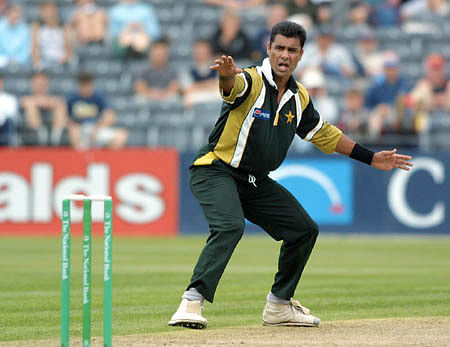
Waqar Younis

 Waqar Younis Biography

Source Link www.google.com

Waqar Younis Maitla is a former Pakistani right arm fast bowler in cricket and widely regarded as one of the best fast bowlers of all time.

He was best known in cricket for his ability to reverse swing a cricket ball at high speed when bowling at the cricket pitch. He took 373 Test wickets and 416 One Day International wickets during his career. He is considered to be the best exponent of the swing bowling delivery. Younis has the best strike rate for any bowler with over 200 Test wickets. He worked as a bowling coach with the national side from 2006 to 2007.

Younis was appointed as the coach of the Pakistan cricket team on 3 March 2010. His managerial contract with the Pakistan Cricket Board will take part in all forms of cricket, right up to December 2011, which will include all professional competitions, such as the 2011 Cricket World Cup.

Early and personal life

Younis was born in Vehari, Punjab in Pakistan in a Jatt family. He was educated in Sadiq Public School in Bahawalpur in Pakistan, the Pakistani College (Pakistan Islamia Higher Secondary School) in Sharjah and the Government College University in Vehari. He was raised in Sharjah in the United Arab Emirates, where his father was a contract worker. He returned to Pakistan during his adolescent years and there, he started playing cricket.

He is married to Dr. Faryal Waqar Younis with a son Azaan Waqar and a daughter Maira Waqar and now lives in Castle Hill in Australia. Younis has also worked as a television sports commentator for the Nine Network in Australia and for Ten Sports in the United Arab Emirates.

Cricket and coaching career

Younis began his cricket career in Pakistan, playing for several First-class cricket clubs. However he suffered an injury when he had cut and removed his little finger on his left hand, after he had jumped into a canal. He recovered from this accident and went on to continue his sporting career. He was eventually discovered by former Pakistan captain, Imran Khan and was selected to be part of the national side. The turning point of his career happened in England, during the late 1980s and early 1990s, when he played for Surrey County Cricket Club. There he displayed excellent cricketing performances and attracted attention from the sporting public.

He made his International cricket debut for Pakistan against India on 15 November 1989, in the same match that Indian batsman Sachin Tendulkar also made his debut. Younis took 4 wickets in the drawn match including the wickets of Tendulkar and Kapil Dev. He made an immediate impression with his speed and became known in the cricket media as "Wiki" or the "Burewala Express". Younis along with Wasim Akram opened the bowling attack regularly for Pakistan, becoming a feared and potent attack. His most recognized delivery was an inswinging yorker. At his peak, he developed into a very quick fast bowler and also became famous for achieving a hat-trick in a One Day International match against New Zealand in 1994. He won the English County Championship with Glamorgan in 1997. During the early periods of 2000, he stayed out of the Pakistan team for a brief period allegedly due to suspension and conflicts with bowling partner and captain Wasim Akram. His return to cricket came with him being appointed the captain of Pakistan, a position he held until his team failed to make an impact in the 2003 Cricket World Cup. He retired from cricket in 2003 after the Pakistan Cricket Board persistently ignored him for national selection.

In March 2006, he was appointed as the bowling coach for Pakistan. He resigned from this position on 6 January 2007 in protest against the Pakistan Cricket Board decision to retain him only for the Test series against South Africa and not for the subsequent series of five One Day International matches. He was re-appointed as Pakistan's bowling and fielding coach for their tour of Australia in December 2009. In February 2010, Younis was appointed the head coach of Pakistan after Intikhab Alam was sacked as coach, due to the low-level of performances of the national side during the tour of Australia earlier that year.

Waqar's first job as coach was to lead an inexperienced Pakistan side missing Younis Khan, Mohammad Yousuf and Shoaib Malik to the 2010 ICC World Twenty20 as a consolation though Waqar had two top-notch bowlers in Mohammad Amir and Mohammad Asif at his disposal. He guided the defending champions to the semi-final of the tournament before the were knocked out by Australia courtesy of a superb 60* by Mike Hussey who whacked three sixes in the final over to seal the victory.

The World Twenty20 was followed with the 2010 Asia Cup in which Pakistan lost to Sri Lanka by a narrow-margin as Pakistan's top order collapsed and it was Shahid Afridi who scored 112 to nearly guide Pakistan to victory. In the following match Pakistan lost narrowly against India courtesy of a six by Harbhajan Singh an the third ball of the final over. The following match was a dead rubber between Pakistan and Bangladesh and another Afridi century meant Pakistan scored 385 runs and they comfortably won the match by 139 runs

After this a tour of England followed with two Twenty20's against Australia and two Test matches. Pakistan won both Twenty20's comfortably and the first test saw Pakistan defeated by 154 runs. Pakistan rallied in the second test and for the first time in 15 years Pakistan defeated Australia in a Test match. Ironically the previous victory in 1995 was also courtesy of a superb bowling spell by Waqar Younis

This tour was followed by a controversial tour against England as Pakistan headed in to the final Test match needing to win it to level the series 2-2 the News of the World broke a story that Mohammad Amir, Mohammad Asif and captain Salman Butt were involved in Spot-fixing. This saw the three players temporarily suspended and Pakistan lost by an innings and 225 runs their biggest defeat in history. Low team-morale meant the next two T20 matches were won comfortably by England. Following an ODI series which Pakistan lost 3-2.

This was followed by a tour of Abu Dhabi playing against South Africa Pakistan lost the first Twenty20 match by six-wickets following a batting-collapse which meant that no partnerships were formed. Pakistan also lost the ODI series of five matches by 3-2. Pakistan won the second one day due to Abdul Razzaq's superb performance scoring 109* off 72 ball. The test series of two matches with South Africa was drawn. He also stated that now it was the time for Pakistan to rally and prepare for the World Cup

Skills in cricket

Younis is one of several Pakistani fast bowlers, beginning with Sarfraz Nawaz, who have been successful at bowling reverse swing. In partnership with Akram, Younis opened the Pakistan bowling attack in the 1990s. Cricket critics and scholars attribute Younis and Akram to be one of the most effective fast bowling partnerships in cricket, due to their ability to swing the ball at high speed. The ability to reverse swing and his speed led to him becoming one of the most talented bowlers in modern cricket.

Younis explained his ability to reverse swing by the manipulation of an old ball; with one side shiny, one side rough, the ball would move in the opposite direction to conventional swing. This led to Younis having the ability to bowl inswingers and outswingers in the cricket pitch and in effect both Younis and Akram became successful in taking wickets by this variation of swing bowling. His fastest delivery in cricket was 153 km/h or 95.1 mph, a delivery he bowled against South Africa in 1993. He was also effective in the use of bouncers or short pitch deliveries; Younis' bowling against South Africa in Sheikhupura in Pakistan, is remembered for his effective use of the short pitched delivery.

Following Pakistan's victory during the Test match series versus England in 1992, the English media were suspicious of the reverse swing delivery. It was relatively unknown to the cricketing world during that period and this led to accusations of foul play by critics, however cricket officials found no evidence of foul play and the skill of the reverse swing delivery has been accepted in cricket.

Sri Lanka fast bowler, Lasith Malinga, who became the first bowler in World Cup history to take two hat-tricks, has said that he learnt to bowl his deadly yorkers by watching Pakistan's legendary pair of Wasim Akram and Waqar Younis. No doubt over the years several bowlers have learned and mastered the skill of reverse swing but there are still some techniques which haven't have been explored e.g. banana swing. Title of Banana swing bowler was given to Waqar Younis because of his unique technique of swinging the ball in the air at very high speed before hitting the ground. In most of his hat tricks he has delivered banana swing balls which were unplayable.

Despite his qualities as a fast bowler, he was expensive at times and sometimes lacked the consistency of bowlers such as West Indian fast bowler Curtly Ambrose and Australian fast bowler Glenn McGrath. This may be partly due to the mentality of his former captain, Imran Khan, who prioritised aggression and speed.

Award and records

See also: List of international cricket five-wicket hauls by Waqar Younis

Younis was awarded Wisden Cricketers of the Year in 1992 for his sporting achievements. He is also the only bowler to have taken a 5 wickets in an innings in 3 consecutive One Day International matches. He has taken a 5 wicket hauls on 13 occasions in One Day International matches. In terms of deliveries bowled, he has taken the fastest 50, 300, 350 and 400 wickets in One Day International matches and the fastest 150, 200, 250, 300 and 350 wickets in Test matches.

Although primarily a fast bowler, Younis scored 1010 Test match runs during his career. As of September 2005, he was the only non-batsman to achieve a thousand runs without scoring a fifty.

Younis holds the record for the best strike rate for any bowler with over 200 Test wickets.

Cricket controversies

In July 2000 Younis became the first cricketer to be banned for ball tampering and was fined 50% of his match fee.

There has been some controversy about his date of birth and age. According to ESPN cricinfo sports, Younis was born in 1969 and others including Yahoo! Cricket and CricketArchive claims he was born in 1971.

Waqar Younis
 Waqar Younis
 Waqar Younis
 Waqar Younis
 Waqar Younis

 Waqar Younis

 Waqar Younis

 Waqar Younis

 Waqar Younis
Waqar Younis

Wasim Akram

 Wasim Akram Biography

     Source Link www.google.com

    Full Name: Wasim Akram.
    Birthplace: 3 June 1966,Lahore,Punjab.
    ODI Debut: Pakistan vs NewZealand at Faisalabad,2nd ODI,1984/85.
    Test Debut: Pakistan vs NewZealand at Auckland,2nd Test,1984/85.
    Major Teams: Pakistan,Lancashire,Hampshire.
    Bowling Style: Left Hand Fast.
    Batting Style: Left Handed Batsman.
    Wasim Akram (born June 3, 1966 in Lahore, Punjab) is a former Pakistani cricketer. He was a left-arm fast bowler and left-handed batsman, who represented the Pakistani cricket team in TestsOne-Day Internationals. He is widely regarded as one of the finest fast bowlers ever and holds world records for the most wickets taken in both ODIs (502) and List A cricket (881).

    An immensely talented player first discovered by Imran Khan, Wasim Akram played for his college(Govt. Islamia College Civil Lines, Lahore) as an opening bowler and batsman. As a bowler, Wasim possessed genuine pace, accurate control of line and length and seam position, and could swing the ball both in and out. With a very deceptive ball-concealing action, he could bowl equally well from both sides of the wicket. His mastery of reverse swing with the old ball meant he was at his most dangerous towards the end of an innings, and earned him the nickname Sultan of Swing.
    As well as often being able to find the edge of the bat, Wasim would also focus his attack on the stumps and had a particularly lethal yorker. Of his 414 Test wickets, 193 were taken caught, 119 were taken LBW and 102 were bowled.In partnership with Waqar Younis, he intimidated international batsmen in the 1990s. Together Wasim and Waqar, known as “the two Ws” of the Pakistani team, were one of the most successful bowling partnerships ever.
    Wasim was also skilled with the bat and was regarded as a bowling all-rounder. He was especially effective against spinners. However, he liked to slog and was criticised for his lack of big scores and giving away his wicket too cheaply for a player of his talent. He did silence his critics in October 1996 when he scored 257, not out, of the team’s total of 553 against Zimbabwe at Sheikhupura. He also made good scores in difficult times for the Pakistan team such as his 123 against Australia and his 45 not-out to take Pakistan to victory in a low-scoring match. Pakistan, needing six runs in two balls two win the Nehru Cup saw Akram come out to bat. The first ball he faced was hit out of the ground and secured the cup. Ahmed Bilal was his coach who gave him tricks on reverse swing.

    A Feature by Sidharth Monga
    The fifth ODI between Pakistan and South Africa was dedicated to Wasim Akram who retired just after the World Cup. A moment to rejoice for the oppositions all over the world and the way Proteas easily beat Pakistan one could see how Pakistan missed Wasim. But things aren’t forever and as all good things must come to an end, Wasim has finally called it a day. Here’s a piece that I wrote earlier in tribute to the Big W, God’s own left arm.
    “First of all, convince yourself that you are the best because the rest of your life is gonna go proving this to others” -Wasim Akram, in a T.V commercial.
     One thing Wasim has shown us in his 19 year long career is he enacts what he says. The tremendous confidence he had as a young boy of 18 when some more ordinary guy would be nervous participating in a school debate would make even greatest of champions envious of him. He damn sure knew he was the best and boy, has he proved this to the whole world! Yes he has and in fact, he has done this in a manner that the best of the batsmen in the world fear him. But there’s good news for some new batsmen, the Sultan of Swing has finally decided to retire from international cricket. This would mean batters need not worry about a lanky fast bowler whose run up was a mere 10-15 steps but who could bowl fast, swinging toe crushing yorkers that could render even the best of batsmen mere spectators. And they also need not worry about the late swinging deliveries to which the umpires couldn’t resist raising the finger indicative of an LBW. (29% of his wickets include LBWs!). And bowlers over the world can save themselves blushes, the kind when the very same man got stuck into them and hit them a mile. (Ask Zimbabweans whom he hit for a record number of sixes in his 257 run knock!)

    Time and again, I have seen teams fighting back against a Pakistan bowling attack after early setbacks requiring just about one and a half run per ball in the last few overs. But that’s where the party ends-because then the ball is thrown to Wasim and the whole world knows how desperately impossible it is to score at more than a run a ball when Wasim is bowling at the death. Arguably the best bowler at death, his straight late swinging yorkers are responsible for the shortening of most tails all over the world. And who said that with the advent of helmets and protective equipment, tailenders will be able to contribute more? At least not against a Wasim led Pak attack.

    They say that with age, flair gives way to simplicity; exuberance gives way to soberness and childhood gives way to wisdom that comes with the realization that you have grown old. Flamboyance and age happen to share a negative correlation, but not with Wasim. You have seen him around for about 19 years now, he must be old. He needs insulin everyday, a severe diabetic, he must be really old. And yet, when you watch him take his n hundred and nth wicket, the childish joy on his face makes you believe he is a young debutant who has just taken his first wicket. That’s Wasim Akram for you. Even at the fag end of his career in World Cup 2003, one cannot forget his consecutive deliveries to get Hayden and Martyn. And who could say he is a 37 year old?
    Talk of Wasim and the mind inevitably goes back to World Cup 1992 finals- England cruising towards a victory and all of a sudden Wasim produces two unplayable balls to dismiss Allan Lamb and Chris Lewis in succession. That was when he was at his vintage best. And that he could produce such deliveries consistently when his team desperately needed those is the factor that sets him aside. What’s similar in Steve Wuagh, Sachin Tendulkar, Brian Lara, and Wasim Akram? We all come to expect the unexpected with them. Hand Wasim the ball when nothing is happening for you and he will bring some magic.
    It’s a rare breed, this- the left arm pacemen. Come to think of the names and you don’t have much more than Allan Davidson, Gary Sobbers or Bill Voce. But hands down, the best of them all was spotted by one wise man- Javed, ‘The Spotter’ Miandad. In his very first series against New Zealand in 1984-85, he drew comparisons with all the big names mentioned above. In only his second test, he bagged a 10-wicket haul and became the youngest man to do so. And since then, looking behind is one thing he has never done. Now that when he looks into retrospect, he would like to change the 1996 World Cup Quarter Final against India, the 1999 World Cup Final and the supposed match fixing allegations against him. I call these allegations ‘supposed’ because not in my life have I seen him ever give anything less than One Hundred Percent. Yes it hasn’t been all rosy. It never is, for anyone.

    He has had to take the wrath of a cricket crazy nation and a corrupt administration for every failure of his, no matter how few and far within these failures have come. Add to this the fact that he has taken a majority of his 916 international wickets on subcontinent pitches- dead as dodos, not to forget a long menu of injuries he has fought. The brunt of Akram’s cricket has been borne by his groin and shoulder. His groin was first operated on in 1988 and again two years later. The latter operation was complicated when an adductor muscle separated from his pelvis, leaving his left leg only half as strong as his right: it was restored only by intensive physiotherapy.

    He first experienced shoulder pain seven years ago, while representing Lancashire, and delayed surgery, only to break down when he tried to bowl a bouncer during the Singer Cup Final in Sharjah in April 1997: there were further operations, a six-month lay-off and a regime of painkillers. Add to this, severe diabetes and fading eye sight. And still he continued till 2003 and stayed among the top few bowlers all through. Nothing short of a medical miracle- Is it?

    Despite all the match fixing allegations and personal controversies, he still remains the best quick bowler I have seen operate in 20 years of my life.
    And what better a testimony than the highest run-getter himself-“If I ever get a chance to be reborn as a cricketer, I would want to be Wasim”-Allan Border.
    Retirement
    Wasim retired in 2003, after a brief spell with Hampshire in England. Since then, Wasim has taken up commentary and can currently be seen as a sportscaster for the ESPN Star network, and is also running shows on ARY Digital.
    He is married to Huma Mufti, daughter of Mr. Humayaun Mufti. Huma and Wasim have two sons from their marriage of thirteen years.
     Records.
     In his Test career, Wasim took 414 wickets in 104 matches, a Pakistani record, at an average of 23.62, and scored 2,898 runs, at an average of 22.64.
    In One-Day Internationals, Wasim took a world record 502 wickets in 356 appearances, at an average of 23.52, and scored 3,717 runs, at an average of 16.52.

    Wasim was the first bowler in international cricket to take more than 400 wickets in both forms of the game, and only Muttiah Muralitharan has since achieved this.

    Wasim Akram also held the record for the most wickets in Cricket World Cups — a total of 55 in 38 matches. Australia’s Glenn McGrath broke the record during the 2007 World Cup, ending with a final tally of 77 from 39 matches.On passing Wasim’s record, McGrath said, “Wasim Akram, to me, is one of the greatest bowlers of all time. Left-armer, swung it both ways with the new ball and he was so dangerous with the old ball. To go past him is something I will always remember. Probably the other side of the coin is that if you play long enough, you’re going to break records here and there.”

    Uniquely, Wasim took four hat-tricks in international cricket, two each in Tests and ODIs. He is one of only three bowlers to have taken two Test hat-tricks (the others being Hugh Trumble and Jimmy Matthews), and also one of only three bowlers to have taken two ODI hat-tricks (the others being fellow Pakistani Saqlain Mushtaq and Chaminda Vaas of Sri Lanka). Wasim’s Test hat-tricks are unique, since they were taken in consecutive Test matches in the same series, against Sri Lanka in 1999. Wasim is also one of only two bowlers to have taken both a Test and ODI hat-trick (the other being fellow Pakistani Mohammad Sami).

    Playing in a Test against the West Indies at Lahore in 1990-91, he became one of only six players to have taken four wickets in an over during a Test match. In Wasim’s case, the feat was not part of a hat-trick, the third ball of the series being a dropped catch, which allowed a single.

    Wasim has also achieved the highest score by a number eight batsman in Test cricket — 257 not out from 363 balls against Zimbabwe at Sheikhupura. The innings contained 12 sixes which is also a world record for Test crick.

    He also has the joint-highest number of Man of the Match awards in Test cricket, along with South African Jacques Kallis, with 17.

 Wasim Akram

 Wasim Akram

 Wasim Akram

 Wasim Akram

 Wasim Akram

 Wasim Akram

 Wasim Akram

 Wasim Akram

 Wasim Akram

 Wasim Akram